
#1 Best Training Institute
Fundamental Analysis Course in India
Learn & understand the Business Behind the Stock
- Examine Revenue and profit growth
- Earnings Per Share (EPS), Profit margins
- Return on Equity (ROE), Debt-to-Equity ratio
- Cash flows, P/E & P/B ratio
- Industry Future Growth Prospects
Connect with Us
Want to understand how to analyse a company before investing in its stock? A good Fundamental Analysis Course in India can help you move beyond market tips and learn how businesses, financial statements, industries and valuations influence stock prices.
Fundamental analysis is about asking better questions: Is the company financially strong? Is its business sustainable? Are profits growing? Is debt under control? What is the company actually worth? And most importantly, is the current market price reasonable compared with its intrinsic value?
For students, beginners, investors and aspiring finance professionals, learning fundamental analysis can be a practical starting point for developing professional skills in stock market analysis and equity research.
The objective of Financial Analysis course in India is not simply to find a “good stock.” The real objective is to develop a logical, evidence-based investment view. As fundamental analysis is a method of evaluating a company by studying its business model, financial performance, industry position, management, economic environment and valuation.

What Will You Learn in a Fundamental Analysis Course
A stock may look attractive because its price is rising. Another may appear cheap because its price has fallen sharply. Neither observation alone tells you whether the underlying business is actually attractive. That is where fundamental analysis becomes useful.
Economic Analysis
Understand how GDP growth, inflation, interest rates, monetary policy and economic cycles influence businesses and stock markets. Learn to connect macroeconomic trends with investment opportunities and risks.
Industry Analysis
Learn how to evaluate an industry's growth potential, competition, market size, entry barriers and regulatory environment. This helps you identify stronger industries and compare companies within the same sector.
Company & Business Analysis
Understand a company's business model, products, competitive advantages, management quality and growth drivers. Learn how to determine whether a business has sustainable long-term potential.
Financial Statement Analysis
Interpret the Balance Sheet, Profit & Loss Statement and Cash Flow Statement. Understand what financial numbers reveal about a company's profitability, financial strength and business health.
Financial Ratio
Analysis
Master key ratios such as P/E, P/B, EPS, ROE, ROCE, Debt-to-Equity and Profit Margins. More importantly, learn how to interpret these ratios instead of looking at numbers in isolation.
Stock Valuation
Discover how investors estimate the fair or intrinsic value of a company using methods such as P/E, P/B, EV/EBITDA and Discounted Cash Flow. Learn to compare a stock's market price with its estimated value.
Earnings & Growth Analysis
Learn how to study revenue growth, earnings growth, margins and future business prospects. Understand whether a company's growth is sustainable or simply driven by temporary factors.
Annual Report Analysis
Learn how to extract valuable information from a company's annual report, management commentary, financial statements and notes to accounts. This helps you move beyond headlines and understand the actual business.
Competitive Advantage Analysis
Identify what makes a company different from its competitors, including brand strength, pricing power, distribution network, technology and entry barriers
Risk Analysis
Understand the major risks that can affect an investment, including business risk, financial risk, regulatory risk, industry risk and valuation risk. Learn why identifying risks is just as important as finding growth opportunities.
Investment Thesis Development
Learn how to convert your research into a clear investment thesis explaining why a stock may be attractive or unattractive. Build your conclusion using evidence rather than market rumours or emotions.
Equity Research Report Writing
Learn how professional analysts structure an equity research report, including company overview, industry analysis, financial analysis, valuation, risks and investment view.
Portfolio & Investment Analysis
Understand how fundamental research can support stock selection, diversification and portfolio construction. Learn to evaluate individual investments as part of a broader portfolio rather than in isolation.
Practical
Case Studies
Apply fundamental analysis concepts to real companies and real financial data. Practical case studies help transform theoretical knowledge into an analytical process you can actually use.
Career-Oriented Skills
Develop the analytical foundation required for careers in equity research, investment research, financial analysis and related financial-market roles. For learners targeting regulated Research Analyst activities in India.
Why Choose AIRA for Fundamental Analysis?
AIRA — Accredited Investment Research Analyst™ is designed around a broader investment-research ecosystem rather than treating fundamental analysis as an isolated topic.
Its programme framework covers areas including Fundamental Analysis, Technical Analysis, Wealth Management, International Markets, Trading Strategies, Derivatives & Options, Portfolio Management, Algorithmic Trading and AI.
That broader perspective matters because modern investment research increasingly combines:
Fundamentals + Markets + Valuation + Technology + Research
AIRA’s positioning is centred on developing industry-ready investment research capability, with its programme combining theoretical knowledge, practical market experience, AI-powered research and live portfolio-management exposure.



Career Opportunities After Learning Fundamental Analysis
Equity Research Analyst
Analyse companies, financial statements, industries and valuations to develop investment insights. This is one of the most relevant career paths for learners who build strong fundamental research skills.
Investment Research Associate
Support senior analysts by collecting financial data, studying companies, tracking industry developments and preparing research inputs. It can be a strong entry-level opportunity for finance graduates and trained candidates.
Financial Research Analyst
Work with financial information, company performance, market trends and valuation data to prepare meaningful analysis. Strong fundamental-analysis skills can help you develop the analytical foundation required for this role.
Wealth Management Associate
Support wealth-management teams in understanding client portfolios, investment products and market opportunities. This knowledge can strengthen your ability to evaluate companies and equity investments.
Portfolio Research Associate
Assist investment and portfolio teams with company research, sector analysis and investment monitoring. Fundamental analysis helps you understand whether individual securities fit within a broader portfolio strategy.
Junior Equity Research Roles
Begin your career by assisting research teams with data collection, company screening, financial modelling and industry research. These entry-level roles can provide practical exposure to professional investment research.
Start Your Journey from Fundamental Analysis
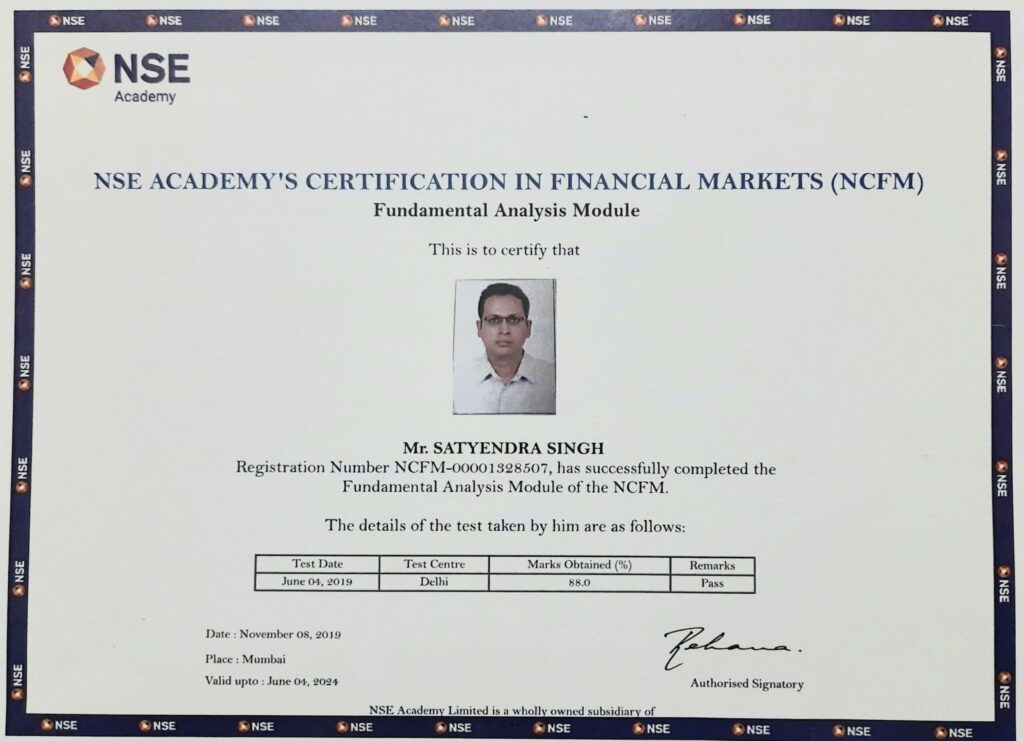
For a beginner who simply wants to understand stocks, a short Fundamental Analysis Course in India may be enough.
For someone looking for a more structured career pathway, AIRA – Accredited Investment Research Analyst can be considered because it combines research-oriented learning with practical market exposure and career-focused training.
For candidates targeting regulated Research Analyst roles, relevant NISM certification and applicable SEBI requirements should also form part of the career plan.
Frequently Asked Questions
A Fundamental Analysis Course teaches learners how to evaluate businesses and stocks using financial statements, business analysis, economic factors, industry research, financial ratios and valuation techniques.
The best course depends on your objective. Beginners can start with a fundamental analysis course, while candidates seeking a career-oriented pathway can consider a comprehensive equity research program such as AIRA alongside relevant NISM certification preparation.
The course is suitable for students, beginners, investors, finance graduates, traders and aspiring equity research professionals. Even learners without advanced financial knowledge can start with a structured beginner-friendly program.
Yes. Students can start learning financial markets and fundamental analysis after 12th. For regulated professional activities, however, additional qualifications, certifications and regulatory requirements may apply.
Neither is universally better. Fundamental analysis focuses on business quality, financial performance and valuation, while technical analysis focuses on price and market behaviour. Learning both can provide a broader understanding of financial markets.
A comprehensive course generally covers economic analysis, industry analysis, company analysis, financial statements, ratio analysis, valuation, annual reports, investment research and equity research report writing.
Fundamental Analysis focuses on the business, financial performance, industry and valuation of a company. Technical Analysis primarily studies price, volume, trends and market behaviour.